World Marathon Majors Guide
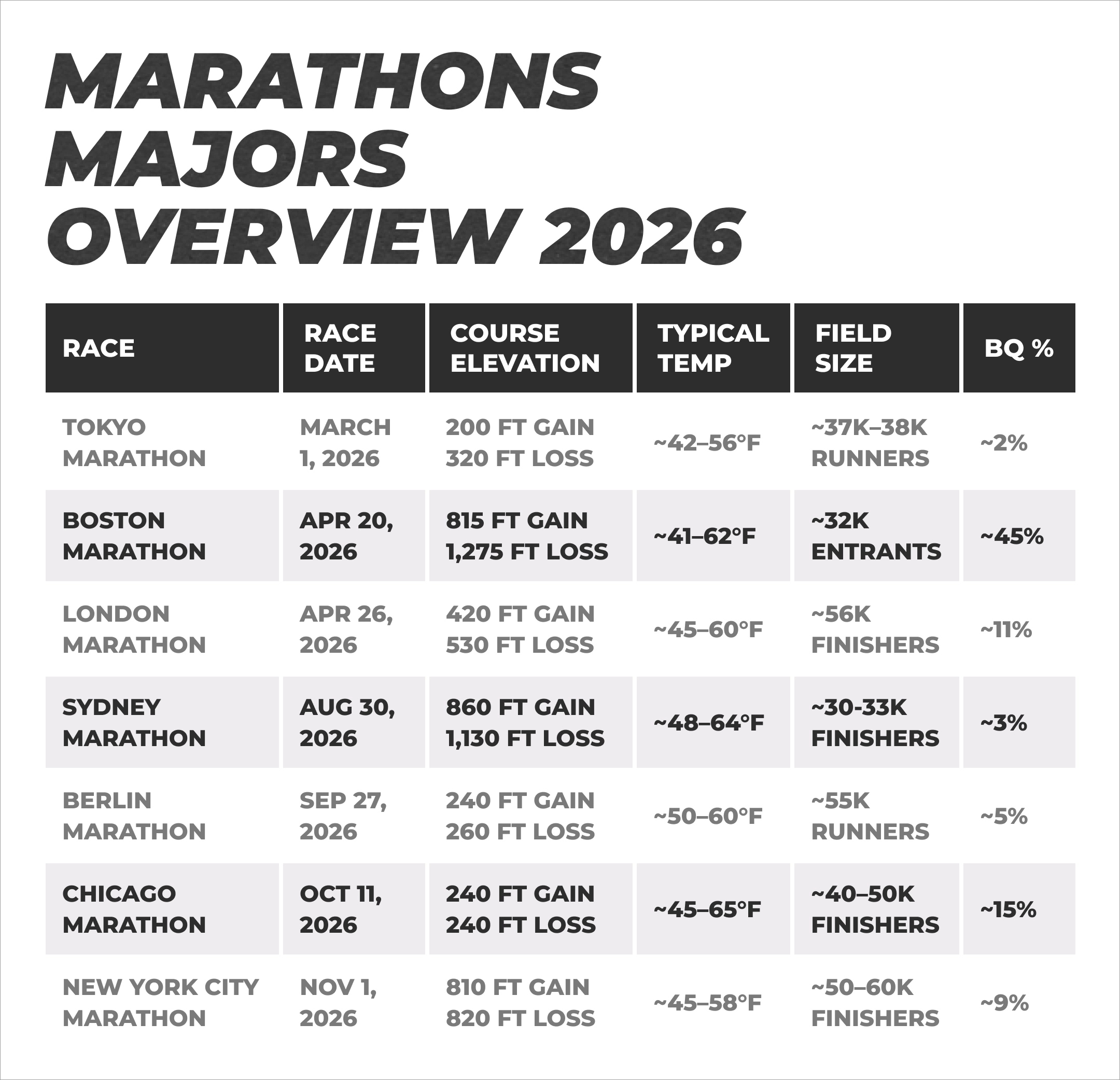
The Abbott World Marathon Majors represent the most iconic races in the sport. From the record breaking streets of Berlin to the loud crowds of New York City, each race offers a completely different experience, course profile, and racing conditions. Whether you’re chasing a PR, a Boston qualifier, or the coveted Six Star Medal, here’s a quick breakdown of each World Major Marathon. Also listed is the course elevation, typical race conditions, field size, and how often runners hit a Boston Qualifier.
Tokyo Marathon
• Race Date: March 1, 2026
• Course Elevation: 200 ft gain / 320 ft loss
• Typical Race Temps: ~42–56°F
• Field Size: ~37,000–38,000 runners
• Approx. BQ%: ~2%

Boston Marathon
• Race Date: April 20, 2026
• Course Elevation: 815 ft gain / 1,275 ft loss
• Typical Race Temps: ~41–62°F
• Field Size: ~32,000 entrants
• Approx. BQ%: ~45%

London Marathon
• Race Date: April 26, 2026
• Course Elevation: 420 ft gain / 530 ft loss
• Typical Race Temps: ~45–60°F
• Field Size: ~56,000+ finishers
• Approx. BQ%: ~11%

Sydney Marathon
• Race Date: August 30, 2026
• Course Elevation: 860 ft gain / 1,130 ft loss
• Typical Race Temps: ~48–64°F
• Field Size: ~30,000–33,000 finishers
• Approx. BQ%: ~3%

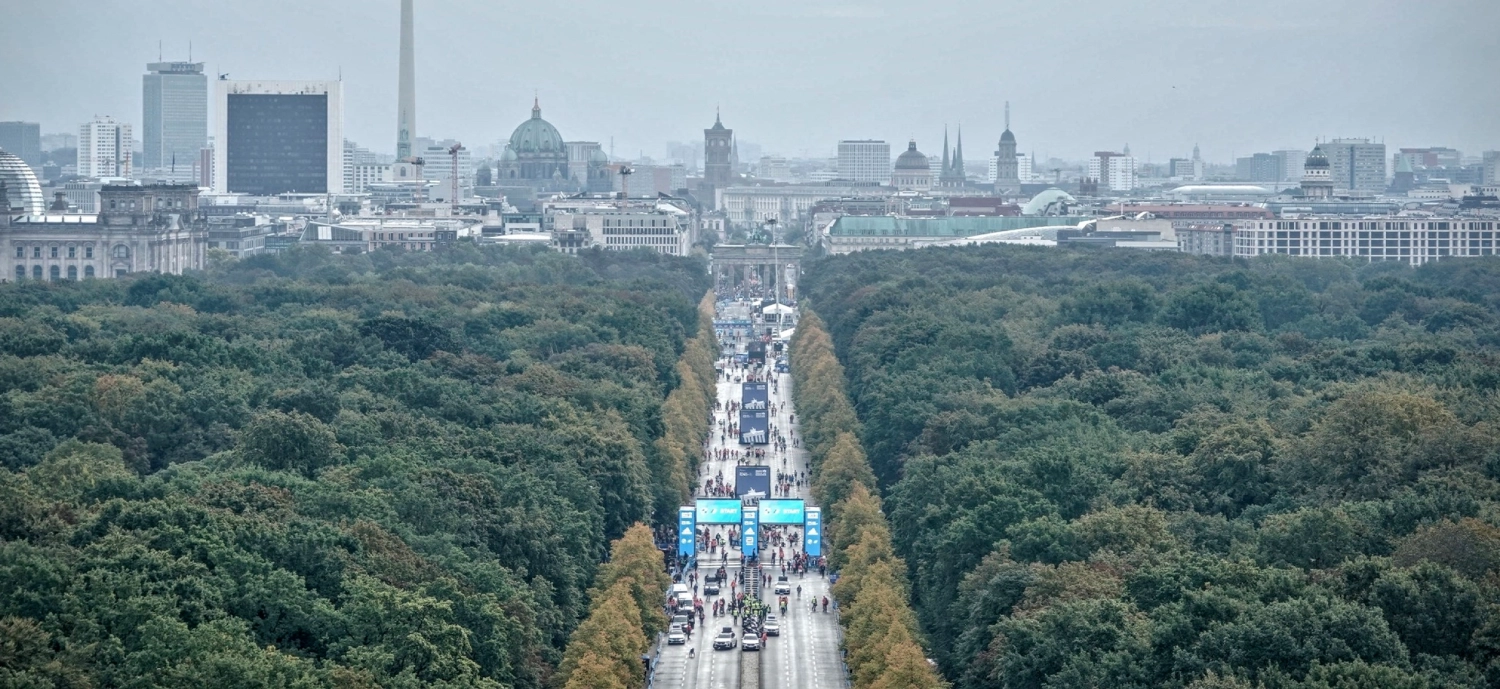
Berlin Marathon
• Race Date: September 27, 2026
• Course Elevation: 240 ft gain / 260 ft loss
• Typical Race Temps: ~50s–60s°F
• Field Size: ~55,000 runners
• Approx. BQ%: ~5%

Chicago Marathon
• Race Date: October 11, 2026
• Course Elevation: 240 ft gain / 240 ft loss
• Typical Race Temps: ~45–65°F
• Field Size: ~40,000–50,000 finishers
• Approx. BQ%: ~15%

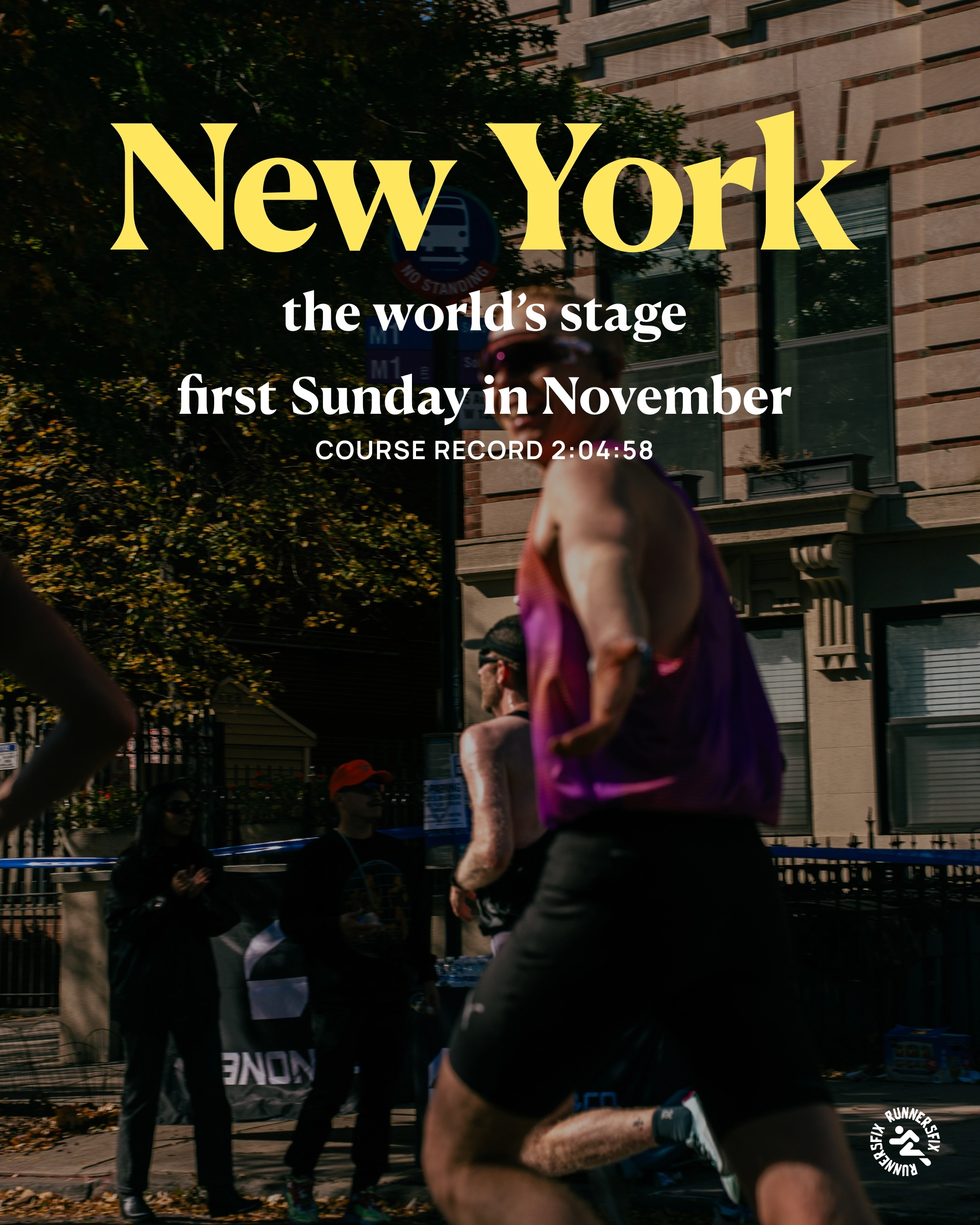
New York City Marathon
• Race Date: November 1, 2026
• Course Elevation: 810 ft gain / 820 ft loss
• Typical Race Temps: ~45–58°F
• Field Size: ~50,000–60,000 finishers
• Approx. BQ%: ~9%